
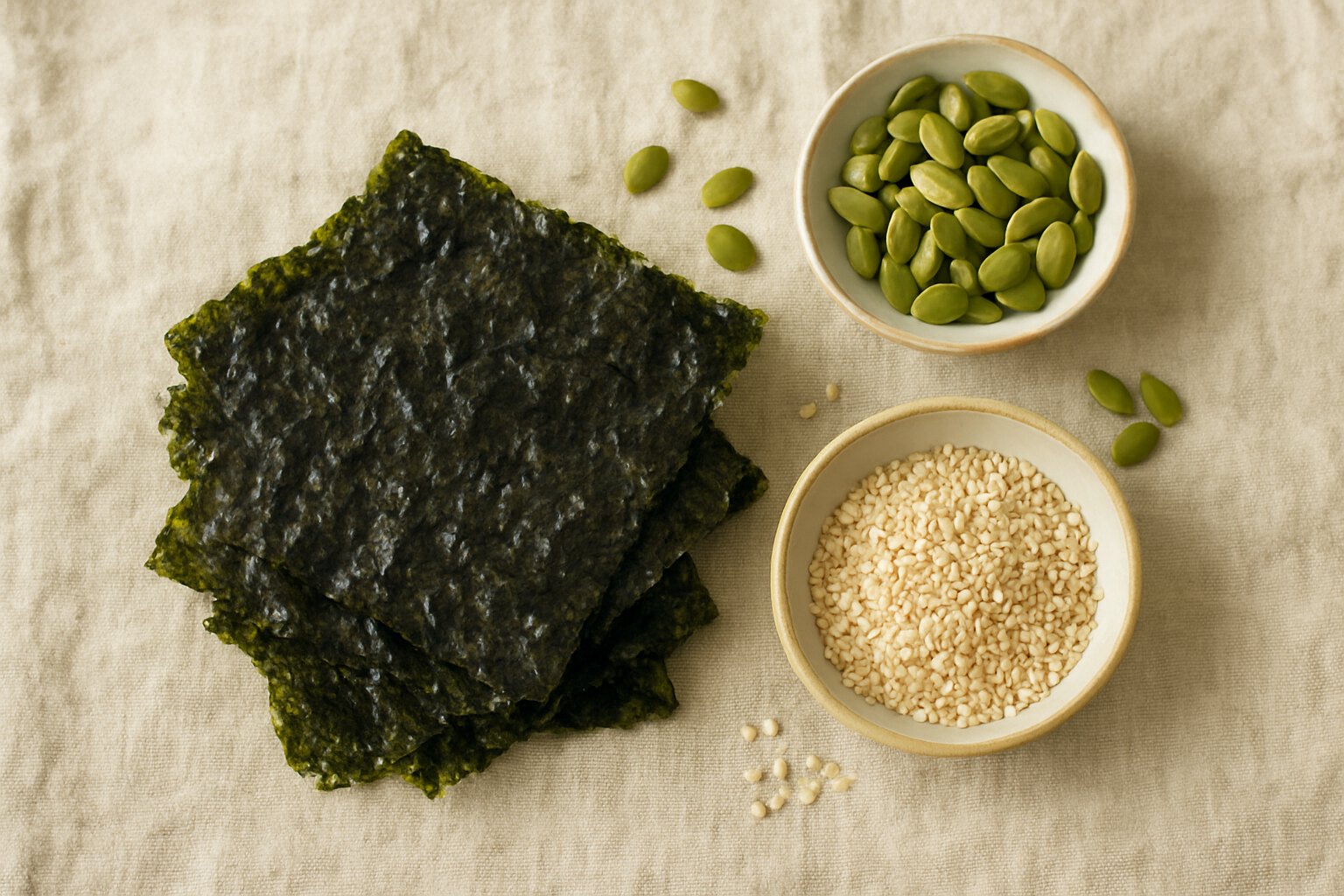
Zinc and iodine: the two nutrients nobody mentions
The list of things vegans are told to watch has four names on it: protein, iron, calcium, B12. Those four are indeed the most important. But two more almost never make the list, and both have a problem of their own once animal foods are gone.
Zinc: present in plants, but blocked
Zinc is involved in immunity, wound healing and taste. It is in plenty of vegan food: pulses, pumpkin seeds, cashews, sesame, oats, tofu.
The problem is not the supply but phytates. These are naturally occurring compounds concentrated in seeds, pulses and wholegrains — precisely the foods that carry zinc. Phytates bind zinc in the gut and reduce how much is absorbed.
So a vegan meal can contain enough zinc while the body receives less than the figure on the nutrition panel.
Three ways to reduce phytates, all ordinary kitchen work
- Soaking. Soak pulses and seeds for a few hours and throw the soaking water away. This is also what Vietnamese cooks already do when preparing sweet soups or beans — few people know it has this effect.
- Fermenting. Tofu, soy paste, fermented bean curd, naturally leavened bread — fermentation breaks down some of the phytates. It is one reason tofu is a better zinc source than whole soybeans.
- Sprouting. Bean sprouts are the familiar example. Sprouted seeds are markedly lower in phytates.
And a small correction: vitamin C does not help zinc the way it helps iron. Do not conflate the two. What helps zinc is fewer phytates, not more lime juice.
Iodine: an entirely different problem
Iodine is involved in thyroid function. Its problem is not absorption but supply: in nature it is distributed very unevenly, and most of it is in the sea.
For omnivores, iodine comes from sea fish, seafood, dairy and eggs. Remove all of those and two routes remain:
Iodised salt
The most common and simplest route — many countries add iodine to table salt precisely as a public health measure. But there are three traps:
- Coarse salt, sea salt and pink salt are usually not iodised. Plenty of people switch to more “natural” salts without realising they have just removed their main iodine source.
- Salt in processed food is mostly not iodised.
- Eating low-salt for blood pressure reduces iodine along with it.
Seaweed
Seaweed is the densest plant source. But here the caution runs the other way: iodine content varies enormously between types and between batches, and some — kombu especially — can be very high.
More is not better. Both too little and too much iodine affect the thyroid. Seaweed is something to eat regularly in moderate amounts rather than occasionally in large ones.
Fitting it into a day
- Zinc — roasted pumpkin seeds in the afternoon; tofu at the main meal; pulses soaked overnight before cooking; sesame scattered over rice and salads.
- Iodine — use iodised salt for everyday seasoning, and eat seaweed regularly in moderate amounts rather than rarely in large ones.
Deficiency signs for both are vague and easily mistaken for something else, so do not self-diagnose and start supplements. High-dose zinc taken long-term also interferes with copper absorption. If you suspect a problem, get tested.
This is general nutritional information and does not replace advice from a doctor or dietitian.
On eating out
A vegan banh mi with tofu and sesame contributes some of the day's zinc; iodine, essentially none. Thập Cẩm at 59,000d and Đậu Hũ Cay at 56,000d are the two loaves with the most tofu.
Banh Mi XANH is open 24 hours: 38 Lê Thị Riêng, 15B Nguyễn Thị Minh Khai, 2B Trần Hưng Đạo and 148B Đề Thám in District 1, and 210 Bùi Văn Ba in District 7. For delivery call 0923.183.183; orders from 500,000d within 5km are delivered free.
Quick questions
Why can zinc be short even when I eat plenty of seeds and pulses?
Because phytates in those same seeds, pulses and wholegrains bind zinc and reduce absorption. A meal can contain enough while the body receives less than the panel says.
How do I reduce phytates?
Soak pulses and seeds and discard the water, eat fermented foods such as tofu and soy paste, and eat sprouted seeds such as bean sprouts. All ordinary kitchen work, not special technique.
Does vitamin C help zinc absorption the way it helps iron?
No. Do not conflate the two. What helps zinc is fewer phytates, not more lime juice.
Is sea salt or pink salt iodised?
Usually not. Many people switch to more “natural” salts without realising they have removed their main dietary iodine source.
Should I eat lots of seaweed to be safe?
No. Iodine content varies enormously and some types such as kombu can be very high. Both too little and too much affect the thyroid — eat it regularly in moderate amounts rather than occasionally in large ones.
Should I just take a zinc supplement?
Not on your own judgement. Deficiency signs are vague and easily mistaken, and high-dose zinc taken long-term interferes with copper absorption. Get tested if you suspect a problem.

Anaemia on a vegan diet: what to eat and what not to drink with meals
Plant iron is absorbed less well than iron from meat. But absorption can be raised considerably — and one very common habit is lowering it.
Processed vegan products: does eating them regularly matter
Vegan cold cuts, sausages and packaged mock meats are convenient. But convenient and good are different things, and the gap shows in three numbers on
Vitamin D in a sunny country: why deficiency still happens
Saigon has sun all year, yet vitamin D deficiency is common. The reason is how people live, not how much sun there is — and vegans have one extra diff
Soy and hormones: sorting the claims from the rumours
Soy is the main protein of Vietnamese vegan cooking, and the most rumoured-about food there is. Here's what has a basis and what doesn't.
 ›
×

Vegan banh mi and plant-based coffee in Ho Chi Minh City. Five shops open 24/7 including Sundays and holidays. Free delivery within 5km on orders from 500,000d.
Brand strategy by Ten Mien Dang Cap
© 2026 Bánh Mì XANH. All rights reserved.