
Why vegan restaurants cluster near temples
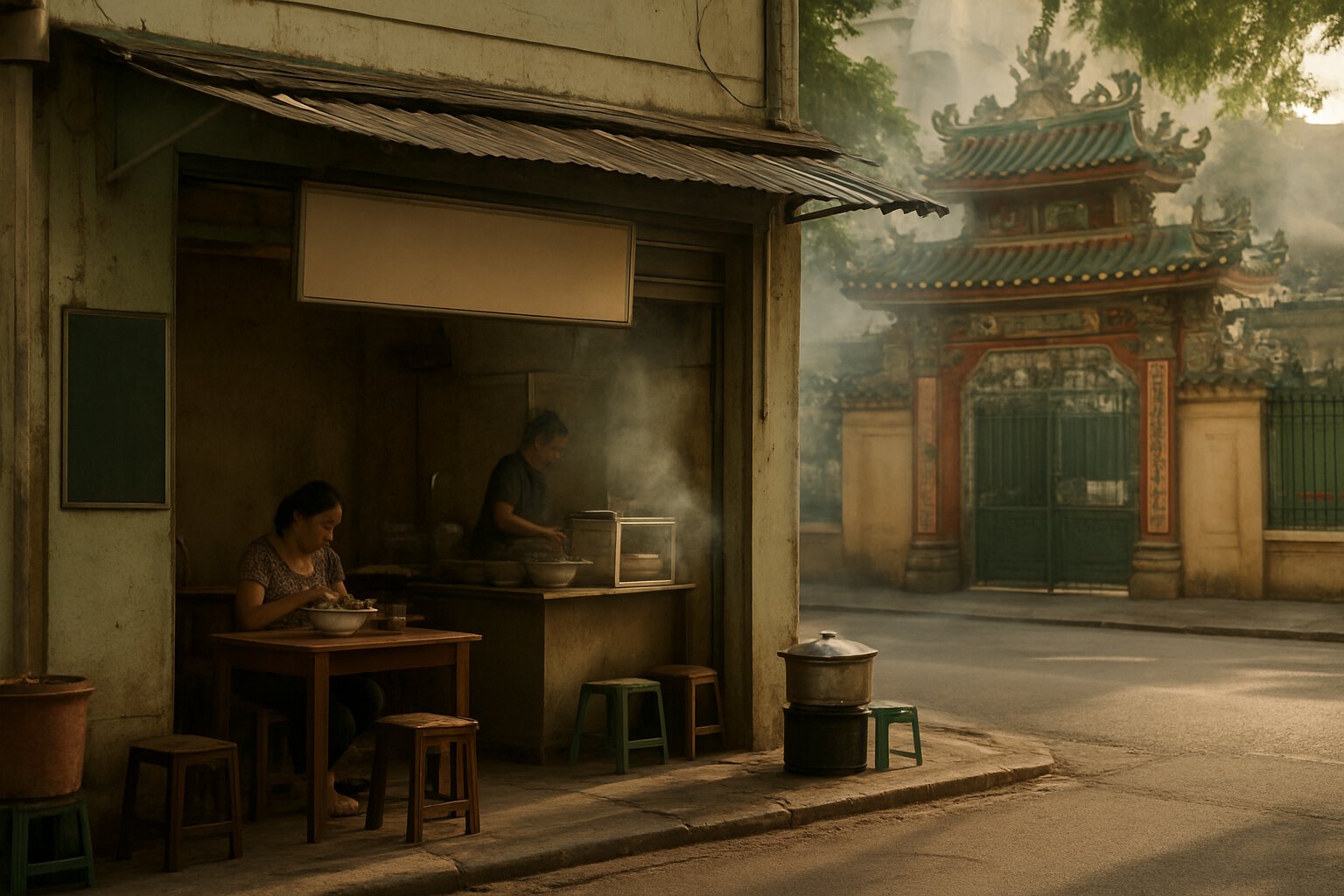
Open a map and search for vegan food in Saigon and a pattern appears immediately: they cluster around temples. Not all of them, but often enough that it is not coincidence.
The reason is not religious. It is ordinary business — those locations come with three things every vegan restaurant needs.
1. A ready customer base, and the right kind
The most obvious reason. People visiting a temple are all but certain to be eating vegan, at least that day. The restaurant does not have to find customers — they are already there for another reason.
More importantly, this group has a predictable rhythm:
- The first and fifteenth of the lunar month are the busiest days, and everyone knows in advance which days those are.
- Major festivals — the first and seventh month full moons — are busier still.
- The busy hours are fixed too: after the morning service and after the midday one.
For a food business, knowing in advance which days and hours will be busy is worth far more than being steadily busy but unpredictably so. It determines how much to buy in and how many staff to roster.
2. Suppliers close by
Around a temple there is usually a whole ecosystem serving vegan needs: tofu stalls, dried vegan goods, vegetable sellers, incense and offering shops.
For a vegan restaurant that is a real advantage:
- Buying small quantities several times a day. Run out of tofu mid-service and you walk to the end of the lane rather than waiting until tomorrow.
- Several suppliers to choose between, so prices are competitive and quality easy to compare.
- Sellers who know vegan goods — no need to explain why you want pickles made without fish sauce.
Open a vegan restaurant somewhere without that ecosystem and every shortfall becomes a problem.
3. Ceremonial and bulk orders
The part outsiders rarely think about, and significant to the takings. Temples and the households around them need large vegan orders for ceremonies, anniversaries and charitable distributions.
Unlike walk-in trade, these are booked ahead, large, and recurring to a calendar. For a small restaurant, that group is often steadier than passing trade.
The downside of the location
Stating both sides, because it is not all advantage:
- Takings swing violently with the lunar calendar. Two days a month are many times busier; the other twenty-eight are quiet. The business has to survive on the quiet days, not on the two busy ones.
- Dense competition. One lane can hold five or seven vegan places. Everybody sees the same opportunity and everybody takes it.
- Higher rent, for precisely that reason.
- Little passing trade. People who do not visit the temple do not come past.
Why some vegan places choose the opposite
Some deliberately do not open near a temple, choosing office districts, tourist areas or residential neighbourhoods instead. The logic is quite different:
- Steadier trade. Office workers eat lunch every day rather than twice a month.
- A different customer group. People eating vegan for health, foreign visitors eating fully vegan, full-time vegetarians — none of these follow the lunar calendar.
- Less direct competition outside a temple quarter.
In exchange, the customer base has to be built rather than inherited, and rather more explaining about ingredients is required — because customers in those areas do not automatically know what “vegan” covers here.
The five Banh Mi XANH shops sit in the centre, an office district, the backpacker quarter and District 7 — that is, the second approach. It is also why opening 24 hours matters: these customers eat around working hours and going-out hours, not service times.
38 Lê Thị Riêng, 15B Nguyễn Thị Minh Khai, 2B Trần Hưng Đạo and 148B Đề Thám in District 1, and 210 Bùi Văn Ba in District 7. Call 0923.183.183; orders from 500,000d within 5km are delivered free.
Quick questions
Why do vegan restaurants open near temples?
Three practical reasons: temple visitors are all but certain to be eating vegan that day, vegan suppliers are already there, and there is a stream of large orders for ceremonies and anniversaries.
What is the biggest advantage?
A predictable rhythm. Knowing in advance which days and hours will be busy makes buying and rostering far more accurate than being steadily but unpredictably busy.
Is there a downside?
Yes. Takings swing violently with the lunar calendar — two days many times busier, twenty-eight quiet. Competition is dense, rent is higher, and passing trade is low.
Why do some vegan places avoid temple areas?
Because customers in office, tourist or residential districts eat more steadily — by the working week rather than the lunar calendar. The trade-off is building a customer base and explaining more about ingredients.
What is different about suppliers near a temple?
You can buy small quantities several times a day, compare several suppliers, and deal with sellers who already know vegan goods — no explaining why the pickles must be made without fish sauce.
What makes ceremonial orders valuable?
They are booked ahead, large, and recur to a calendar. For a small restaurant that is often steadier than passing trade.

Vegan mock meat: where it came from and why it's argued about
Vegan dishes shaped and named after meat dishes go back further than most people think. So does the argument surrounding them.

'Vegan' on the packaging: how to read the label properly
The word on the front doesn't always say enough. The only reliable method is reading the ingredient list — and knowing which names get overlooked.
Where vegan travellers get stuck in Vietnam
Vietnam has a long vegetarian tradition, yet fully plant-based visitors still get stuck — usually in places nobody expects.
The seventh lunar month: how vegan demand rises and how shops cope
The whole seventh lunar month is peak season for vegetarian food, not just the full moon. It's the month when the rhythm of trade changes most.
 ›
×

Vegan banh mi and plant-based coffee in Ho Chi Minh City. Five shops open 24/7 including Sundays and holidays. Free delivery within 5km on orders from 500,000d.
Brand strategy by Ten Mien Dang Cap
© 2026 Bánh Mì XANH. All rights reserved.