
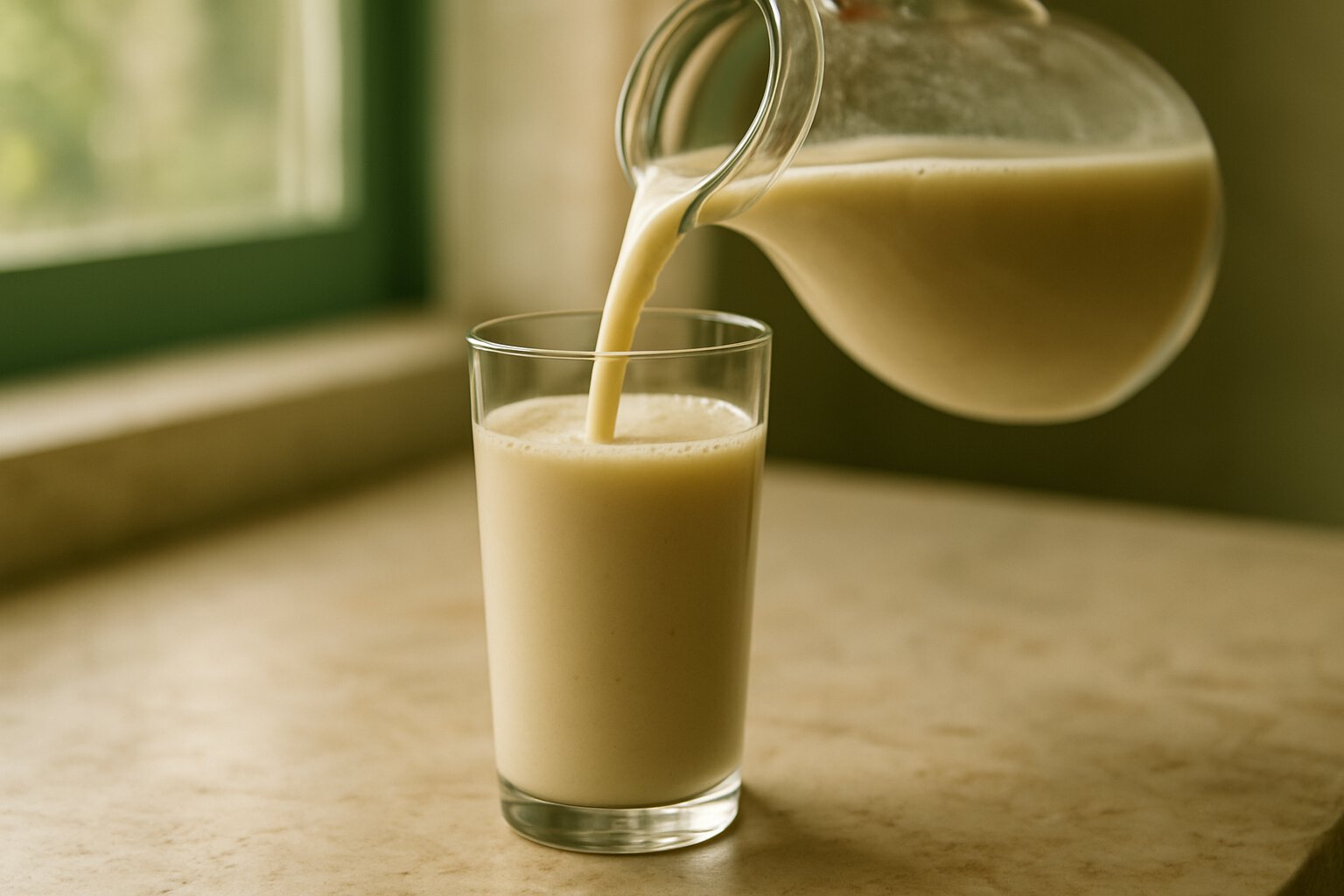
Reading a nut milk label: three numbers tell you whether it is worth buying
The plant-milk shelf is now as long as the dairy shelf. Every carton says much the same thing on the front: pure, unsweetened, nutritious. The front is where every brand looks equally good. The back is where you find out, and you only need to look at three things.
Number one: what percentage is actually nut
The most important figure and the one most often buried. Nut milk is nuts blended with water, so the proportion of nuts determines almost everything: flavour, richness, protein.
The ranges you actually meet:
- Under 2% — mostly water. These usually need a thickener to feel like anything, and the protein is negligible.
- 2 to 6% — the common range for commercial almond and cashew milks.
- Over 6% — thick, with a clear nut flavour. Home-made soy milk usually sits here or higher.
If the percentage is not stated, read it indirectly: look at the order of ingredients, which are listed by descending weight. Water first is normal — but if sugar comes before nuts, that carton has more sugar in it than nuts.
Number two: sugar per 100ml
Do not read the sugar figure “per serving”, because every brand defines a serving differently — 100ml, 180ml and 200ml all appear. Always convert to 100ml before comparing.
Two kinds of sugar appear on a label:
- Naturally occurring sugar — already in the nuts and grains. Oat milk tastes distinctly sweet because enzymes break oat starch down into sugars during manufacture. That is not added sugar.
- Added sugar — cane sugar, syrup, malt, fructose. This is what to look for.
“Unsweetened” on the front usually means no sugar added, not no sugar present. An unsweetened oat milk may still show 4–5g of sugar per 100ml, and that is the natural sort — not wrong, just worth understanding.
Number three: added calcium and B12
This decides how far a nut milk replaces dairy nutritionally.
Cow's milk contains calcium already. Nut milk does not, unless the manufacturer adds it. Many are fortified with calcium, some also with B12 and vitamin D — which is genuinely valuable for vegans, since B12 is virtually absent from plants as they grow.
Look in the nutrition panel, or in the ingredients list under the chemical names: calcium carbonate, tricalcium phosphate, cyanocobalamin (B12), cholecalciferol or ergocalciferol (vitamin D).
A fortified carton must be shaken before pouring. The minerals settle; pour the first half without shaking and the fortification stays in the carton.
Label words that mislead
- “Pure” — no agreed definition, and says nothing about the nut percentage.
- “No preservatives” — most UHT nut milk needs none anyway, being heat-treated and sealed. Not untrue, but not a point of difference.
- Stabilisers (gellan gum, lecithin) — not fillers. They keep the protein and oil evenly suspended, and they are what stops a nut milk coffee from splitting. Seeing them is not a mark against a product.
Choosing by purpose
- Replacing dairy for calcium — pick one that states added calcium, ideally with B12 and D as well.
- For coffee — pick one labelled for baristas or containing a stabiliser; oat and cashew are the most robust.
- With breakfast cereal — pick a higher nut percentage for enough body and flavour.
- For young children — nut milk does not replace infant formula. That is a question for a paediatrician, not for a label.
At the shops, Nut Milk Coffee at 45,000d, Nut Milk Bubble Tea at 45,000d and the Brown Sugar version at 48,000d all use nut milk. We do not publish nutrition figures per glass — these are drinks to have with a meal, not nutritional supplements.
The five shops are open 24 hours: 38 Lê Thị Riêng, 15B Nguyễn Thị Minh Khai, 2B Trần Hưng Đạo and 148B Đề Thám in District 1, and 210 Bùi Văn Ba in District 7. Call 0923.183.183; orders from 500,000d within 5km are delivered free.
This is general information about reading labels and does not replace advice from a doctor or dietitian.
Quick questions
What should I look at first on a nut milk carton?
The nut percentage. Nut milk is nuts blended with water, so that proportion determines flavour, richness and protein. If it is not stated, check the ingredient order — if sugar comes before nuts, there is more sugar than nuts.
Does “unsweetened” mean no sugar?
Usually it means no sugar added. An unsweetened oat milk can still show 4–5g per 100ml, which is the natural sugar produced when enzymes break down the oat starch.
Why convert to 100ml before comparing?
Because brands define a serving differently — 100ml, 180ml or 200ml. Comparing “per serving” figures between two cartons compares two different things.
Are stabilisers in nut milk just filler?
No. Gellan gum and lecithin keep the protein and oil evenly suspended, and they are what stops a nut milk coffee splitting. Seeing them on a label is not a mark against it.
Why shake a fortified carton?
Because the minerals settle. Pour the first half without shaking and the fortification stays behind in the carton.
Can nut milk replace infant formula?
No. That is a question for a paediatrician rather than something to decide from a label.

Anaemia on a vegan diet: what to eat and what not to drink with meals
Plant iron is absorbed less well than iron from meat. But absorption can be raised considerably — and one very common habit is lowering it.
Processed vegan products: does eating them regularly matter
Vegan cold cuts, sausages and packaged mock meats are convenient. But convenient and good are different things, and the gap shows in three numbers on
Vitamin D in a sunny country: why deficiency still happens
Saigon has sun all year, yet vitamin D deficiency is common. The reason is how people live, not how much sun there is — and vegans have one extra diff
Soy and hormones: sorting the claims from the rumours
Soy is the main protein of Vietnamese vegan cooking, and the most rumoured-about food there is. Here's what has a basis and what doesn't.
 ›
×

Vegan banh mi and plant-based coffee in Ho Chi Minh City. Five shops open 24/7 including Sundays and holidays. Free delivery within 5km on orders from 500,000d.
Brand strategy by Ten Mien Dang Cap
© 2026 Bánh Mì XANH. All rights reserved.