
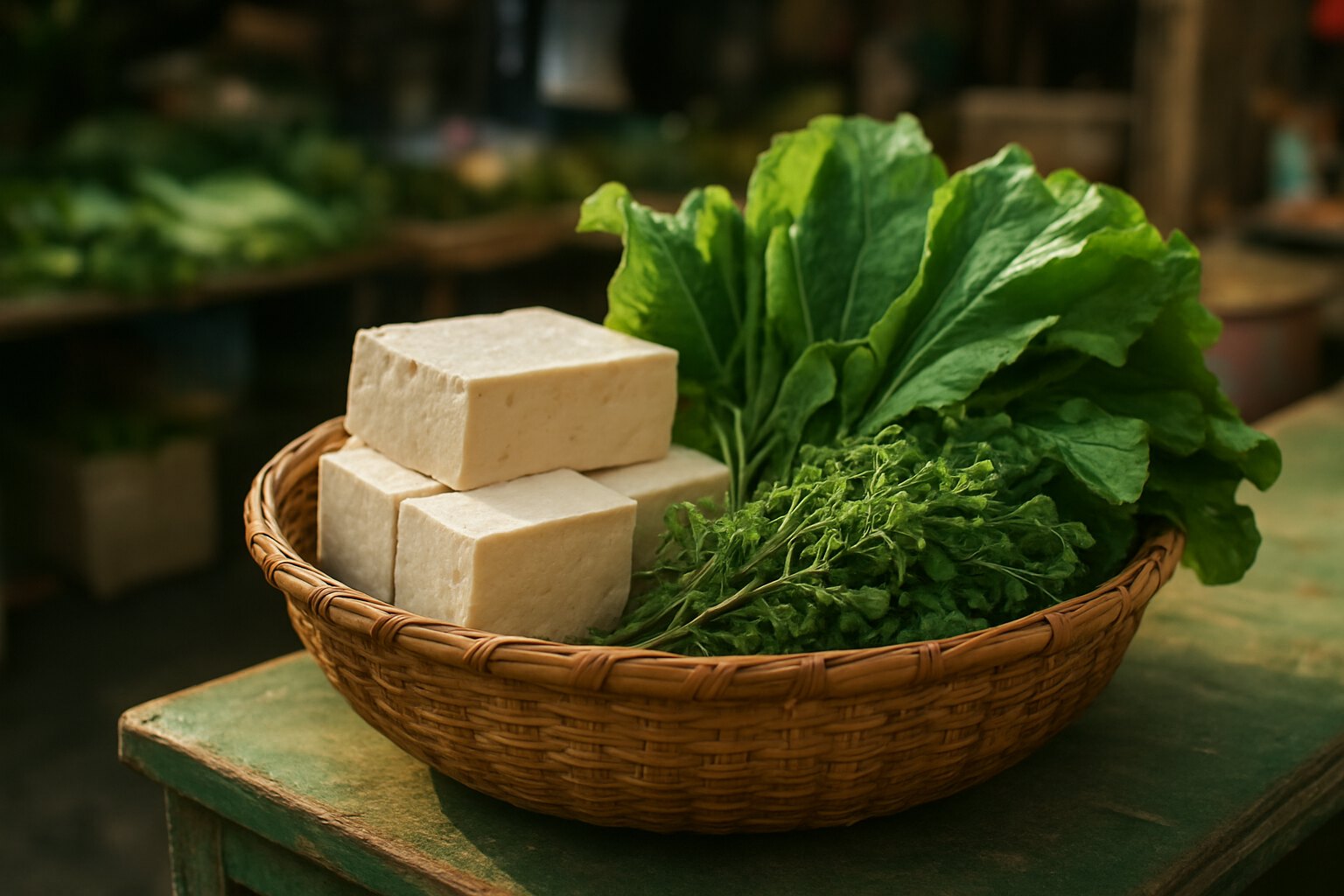
Periodic, lifelong and fully plant-based: three levels, three ways to shop
These three terms get used interchangeably, including in restaurants. But they mean three quite different things, and each calls for a different way of buying food.
The three levels
Periodic — vegetarian on set days
Eating vegetarian on particular days of the lunar month and returning to normal otherwise. The most common pattern is two days — the first and the fifteenth — then four, six or ten, rising in number.
This is the level most people follow, and the reason vegan food shops in Saigon fill up dramatically on exactly two days each month.
Lifelong — vegetarian year-round
No meat or fish at any time, not tied to any calendar. But eggs and dairy vary by person — this is the biggest source of misunderstanding. Some lifelong vegetarians use them, some don't.
Many also avoid the five pungent roots — onion, garlic, chives, shallot and asafoetida — for reasons rooted in religious practice rather than nutrition.
Fully plant-based — nothing animal-derived
The strictest level: nothing connected to animals at all, not simply no meat. That means no eggs, no dairy, no honey, no gelatin, no fish sauce, and things people rarely consider such as certain colourings and glazes of animal origin.
Many at this level also avoid animal-derived materials — leather, wool, silk — so it's usually a way of living rather than only a way of eating.
Three levels, three ways to shop
Periodic: a matter of planning, not labels
The hard part here isn't reading labels, it's arranging things: two days a month sit outside the usual routine.
- Check the calendar ahead. When the first or fifteenth falls on a working day, know where you'll eat, because vegan places are packed.
- Buy the day before. These are the two days market prices for vegetables and beans tick up and vegan stalls sell out early.
- Less label-reading than the other two levels, since most people eating this way simply avoid obvious meat and fish.
Lifelong: a matter of kitchen habits
Eating this way year-round shifts the question from "what today" to "how to stay nourished and not get bored".
- Rotate protein sources. Tofu, wheat gluten, tofu skin, pulses, mushrooms — each is different, and one thing every day is both dull and less balanced.
- Settle the egg-and-dairy question with yourself, then state it when ordering. "I'm vegetarian" doesn't tell a cook enough.
- If you avoid the five pungent roots, ask specifically — a great many vegetarian dishes in shops contain onion or garlic.
Fully plant-based: a matter of labels and questions
This level takes the most effort when shopping, because animal ingredients hide in unexpected places.
- Read the ingredient list, not just the word "vegetarian" on the front. Some vegan cold cuts contain egg white; some baked goods use butter or milk.
- Ask three things when eating out: are the pickles made with fish sauce, does the sauce contain egg, and is the frying oil shared with non-vegetarian items.
- Watch sweets. Ice cream, crème caramel and some chewy sweets contain gelatin or dairy.
- Honey is the one newcomers most often forget.
Quick comparison
| Periodic | Lifelong | Fully plant-based | |
| Meat and fish | No, on vegetarian days | No | No |
| Eggs, dairy | Varies | Varies | No |
| Honey | Usually yes | Usually yes | No |
| Five pungent roots | Usually yes | Many avoid | Varies |
| Hardest part | Scheduling | Balance and variety | Labels and questions |
How to say it when ordering
The label doesn't convey the requirement — naming what you don't eat is far clearer:
- Periodic: "Vegetarian, please" covers most situations.
- Lifelong including eggs and dairy: "Vegetarian; eggs and dairy are fine."
- Lifelong without pungent roots: "Vegetarian, no onion or garlic."
- Fully plant-based: "Completely plant-based — no egg or dairy, pickles without fish sauce, sauce without egg."
The last one is long but worth it, because it names the three places things slip. On the phone you can say the whole sentence and hear the answer; an app notes box gets skimmed.
Five shops, all open 24 hours: 38 Le Thi Rieng, 15B Nguyen Thi Minh Khai, 2B Tran Hung Dao, 148B De Tham (District 1) and 210 Bui Van Ba (District 7). Call 0923.183.183.
Quick answers
What does periodic vegetarian mean?
Eating vegetarian on set days of the lunar month and normally otherwise. The most common pattern is two days — the first and fifteenth — with four-, six- and ten-day patterns above it.
Do lifelong vegetarians eat eggs and dairy?
It varies by person, which is the biggest source of misunderstanding. Say so explicitly when ordering rather than relying on the label alone.
How does fully plant-based differ?
Nothing animal-derived at all: no eggs, no dairy, no honey, no gelatin, no fish sauce. Lifelong vegetarian only guarantees no meat or fish.
What are the five pungent roots?
Onion, garlic, chives, shallot and asafoetida. Many lifelong vegetarians avoid them for reasons tied to religious practice rather than nutrition — and since many shop-made vegetarian dishes contain onion or garlic, it has to be asked about specifically.
What should a fully plant-based diner ask about?
Three things: whether the pickles are steeped with fish sauce, whether the sauce contains egg, and whether the frying oil is shared with non-vegetarian items. None of these are visible.
Why do vegan shops fill up two days a month?
Because periodic vegetarian eating is the most widely followed level, and the first and fifteenth are its most common days. On those days market prices for vegetables and beans also rise and vegan stalls sell out early.

On long-term medication and want to eat vegan: what to ask your doctor
Changing your diet during treatment is a conversation to have with a doctor. This article gives no medical advice — it helps you prepare the right que

Eating vegan through the Vu Lan month: a whole month or a few days
The hard decision isn't whether to eat vegetarian but which level you can hold to the end of the month. How you plan meals decides that.
Stopped eating vegan and want to go back: where to restart
Stopping partway is very common. Going back works better if you look at why it broke down last time instead of restarting the same way.
Training hard on a vegan diet: arranging meals around the session
The real question isn't whether you can train on plants. It's how to arrange meals around a session so you have enough energy without feeling heavy.
 ›
×

Vegan banh mi and plant-based coffee in Ho Chi Minh City. Five shops open 24/7 including Sundays and holidays. Free delivery within 5km on orders from 500,000d.
Brand strategy by Ten Mien Dang Cap
© 2026 Bánh Mì XANH. All rights reserved.