
Omega-3 on a vegan diet: which seeds, and why flaxseed is not the whole answer
Ask a vegan where their omega-3 comes from and the answer is almost always “flaxseed, walnuts, chia”. That is correct, but incomplete — and the missing part is the important one.
Omega-3 is not one thing but three
The term covers three different compounds, and the body uses them differently:
- ALA — in flaxseed, chia, walnuts, rapeseed oil. The only one a vegan gets easily from ordinary food.
- EPA — involved in inflammation and cardiovascular function.
- DHA — a structural component of the brain and retina. This is the one raised in connection with pregnancy and young children.
The body can convert ALA into EPA and DHA. The catch is that the conversion rate is low — commonly cited figures are a few per cent for EPA and lower still for DHA, and the rate varies from person to person.
Which means eating more flaxseed does not automatically produce more DHA. This is what “flaxseed is enough” leaves out.
ALA in everyday meals
Worth eating regardless, because ALA has a role of its own:
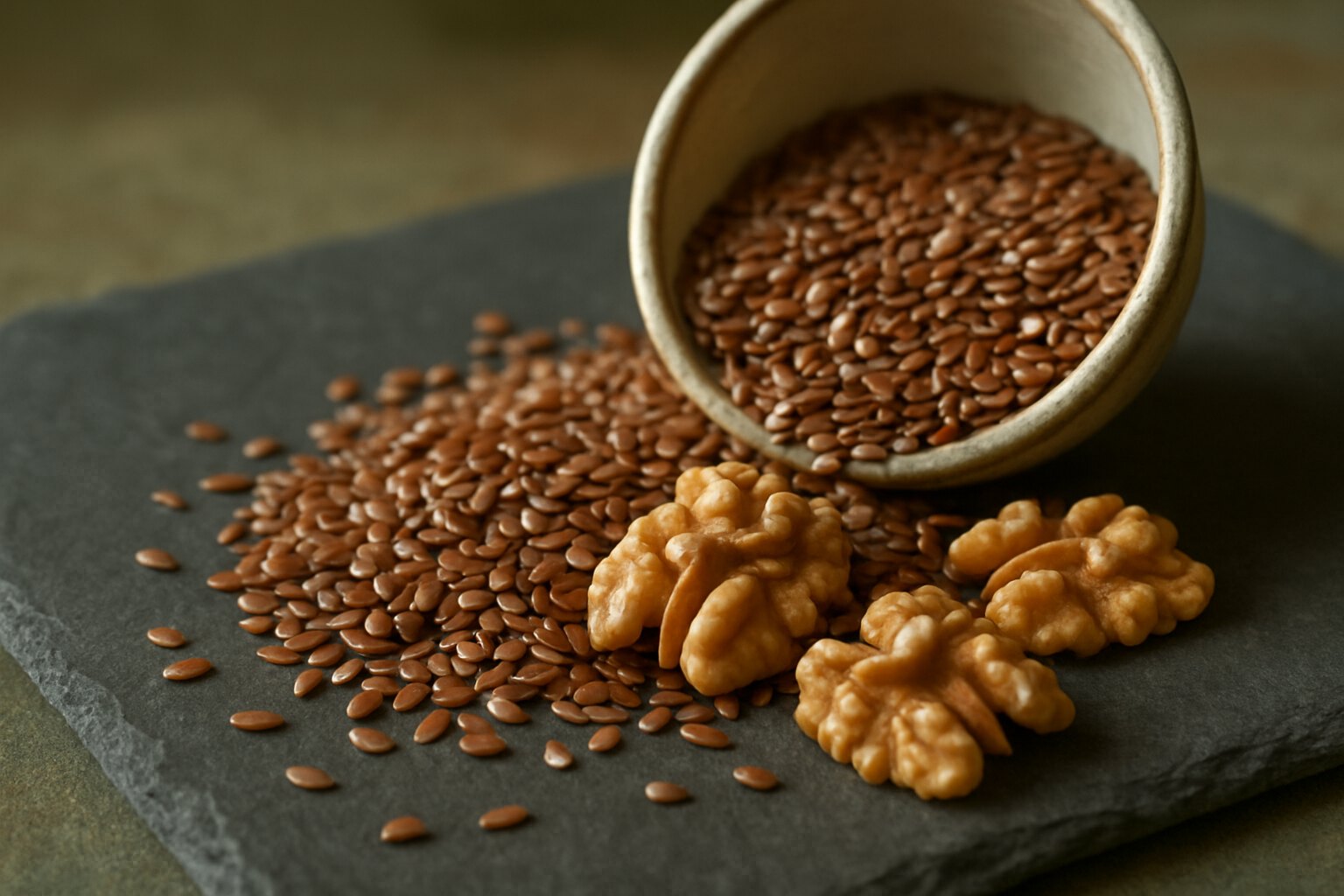
- Flaxseed — the densest source. It has to be ground: whole seeds pass through largely intact, so eating them whole delivers almost nothing. Once ground, keep it in the fridge and use within a few weeks, because the oil goes rancid quickly.
- Chia — no grinding needed; the seeds are small and soften in liquid. Soak before eating.
- Walnuts — the easiest, no preparation at all. A few a day.
- Rapeseed and flaxseed oil — for cold dressings. Flaxseed oil is not for frying; heat destroys it quickly.
Where DHA and EPA come from
The familiar source is fish — but fish do not make them either. Fish get them from algae they eat. Algae is the actual origin; fish are only where it accumulates.
So vegans have a direct route: algae oil, a fully plant-based supplement for DHA and EPA, widely sold in capsules.
Whether you need it and at what dose varies by person, so ask a doctor or dietitian. The three groups usually mentioned are pregnant and breastfeeding women, young children, and people eating fully vegan for many years.
Something rarely mentioned: the omega-6 ratio
This is the most interesting part and the most practical. For ALA to convert into EPA it has to use the same enzyme system as omega-6. The two compete for the same machinery.
Common cooking oils — soy, sunflower, corn — are high in omega-6. A diet heavy in food fried in those oils means omega-6 occupies the enzyme system, and the ALA you are deliberately eating converts even less readily.
So alongside eating more ALA there is a second thing that helps: less deep-fried food. Fewer people think of it, and it is the easier of the two.
Fitting it into a day
- Morning — a spoon of ground flaxseed into porridge, nut milk or a smoothie.
- Afternoon — a few walnuts instead of something sweet.
- Dressings — rapeseed oil instead of ordinary oil for cold dishes.
- Across the week — one fewer fried meal, swapped for steamed or quickly stir-fried.
To be plain about it: vegan banh mi is not a source of omega-3. Tofu, vegan cold cut and vegetables give protein and fibre, but omega-3 has to come from the seed group above, or from algae oil. Eating a good loaf and getting enough omega-3 are separate matters.
Banh Mi XANH is open 24 hours at 38 Lê Thị Riêng, 15B Nguyễn Thị Minh Khai, 2B Trần Hưng Đạo and 148B Đề Thám in District 1, and 210 Bùi Văn Ba in District 7. For delivery call 0923.183.183; orders from 500,000d within 5km are delivered free.
This is general nutritional information and does not replace advice from a doctor or dietitian.
Quick questions
Is daily flaxseed enough omega-3?
Enough ALA, but ALA has to be converted into EPA and DHA, and the conversion rate is low and varies between people. “Flaxseed is enough” leaves out the most important part.
Why must flaxseed be ground?
Whole seeds pass through largely intact, so you get almost nothing from them. Once ground, refrigerate and use within a few weeks — the oil inside goes rancid quickly.
Where do vegans get DHA?
From algae oil. Fish get their DHA from the algae they eat rather than making it, so algae is the actual origin. Whether you need a supplement, and at what dose, is a question for a doctor.
Can flaxseed oil be used for frying?
No. Heat destroys it quickly. Use it for cold dressings only.
What has omega-6 got to do with it?
ALA and omega-6 compete for the same enzyme system, so a diet heavy in soy, sunflower or corn oil makes ALA convert less readily. Cutting deep-fried food helps as much as eating more seeds.
Does vegan banh mi contain omega-3?
Not meaningfully. Tofu and vegetables provide protein and fibre; omega-3 has to come separately from seeds or algae oil.

Anaemia on a vegan diet: what to eat and what not to drink with meals
Plant iron is absorbed less well than iron from meat. But absorption can be raised considerably — and one very common habit is lowering it.
Processed vegan products: does eating them regularly matter
Vegan cold cuts, sausages and packaged mock meats are convenient. But convenient and good are different things, and the gap shows in three numbers on

Vitamin D in a sunny country: why deficiency still happens
Saigon has sun all year, yet vitamin D deficiency is common. The reason is how people live, not how much sun there is — and vegans have one extra diff
Soy and hormones: sorting the claims from the rumours
Soy is the main protein of Vietnamese vegan cooking, and the most rumoured-about food there is. Here's what has a basis and what doesn't.
 ›
×

Vegan banh mi and plant-based coffee in Ho Chi Minh City. Five shops open 24/7 including Sundays and holidays. Free delivery within 5km on orders from 500,000d.
Brand strategy by Ten Mien Dang Cap
© 2026 Bánh Mì XANH. All rights reserved.